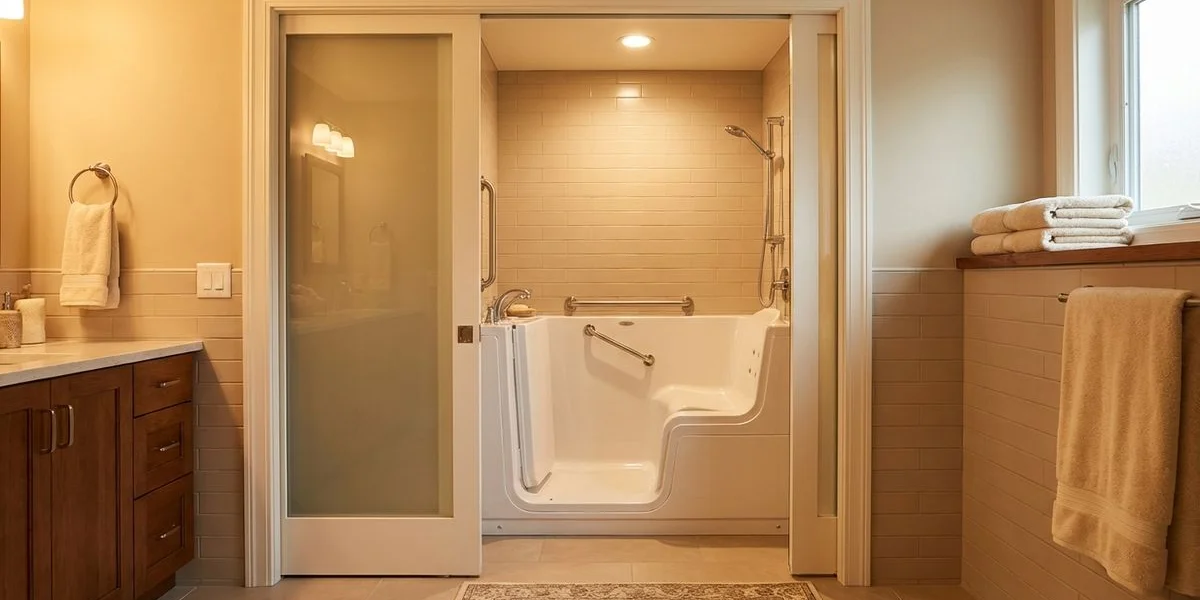
Walk-in Tubs That Make Aging in Place Safer and Easier
Walk-in tubs provide a safe, accessible bathing experience for seniors who want to maintain their independence at home. With low-threshold entry, built-in grab bars, anti-slip flooring, and therapeutic hydrotherapy jets, these tubs dramatically reduce fall risk in one of the most dangerous rooms in the home. A one-time installation investment often costs far less than a single year of assisted living.
What Walk-in Tubs Include
What Are Walk-in Tubs and Why Do Seniors Need Them?
Walk-in tubs are specially designed bathing solutions that feature a watertight door with a low threshold entry, allowing seniors and individuals with limited mobility to step into the tub safely without climbing over a high bathtub wall. The bathroom is one of the most dangerous rooms in the home as people age. CDC research counted roughly 234,000 bathroom-injury emergency-room visits a year across everyone aged 15 and over, with rates rising steeply with age. Those affected visit emergency rooms each year due to bathroom-related injuries.
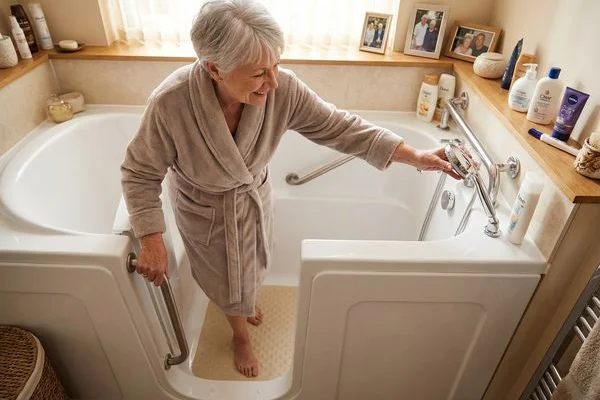
Traditional bathtubs require users to lift their legs over a wall that can be 14 to 18 inches high, a movement that becomes increasingly risky as balance and muscle strength decline with age. Walk-in tubs eliminate this hazard with door thresholds as low as three to four inches, built-in grab bars for stability, and textured anti-slip flooring that provides confident footing even when wet.
For families considering the difficult choice between home modifications and assisted living placement, a walk-in tub represents one of the most impactful single investments you can make. While the national median for assisted living is about $6,200 per month, a walk-in tub installation is a one-time expense that pays for itself within weeks compared to facility costs.
Key Safety Features That Protect Your Loved One
Every walk-in tub recommended through Porchlight at Home includes a comprehensive suite of safety features designed to address the specific risks seniors face in the bathroom.
Low-threshold entry is the cornerstone feature. The sealed door swings open to reveal a step-in height of just three to five inches, making entry accessible even for those who use walkers or have significant mobility limitations. Once inside, the door seals watertight so the tub can be filled.
Built-in grab bars are strategically positioned at entry points, along the tub walls, and near the controls. Unlike aftermarket grab bars that may not be properly anchored, integrated grab bars are engineered to support significant weight and are positioned based on ergonomic research for senior bathing movements.
Anti-slip textured flooring covers the entire tub floor and the entry area. This industrial-grade texturing provides reliable grip even when covered with soap and water, dramatically reducing the risk of slipping during entry, bathing, and exit.
Anti-scald temperature controls prevent the water from exceeding safe temperatures. Many seniors have reduced sensitivity to heat, making them vulnerable to burns from water that feels comfortable to younger adults. Thermostatic mixing valves ensure water stays within a safe range.
Quick-drain technology addresses one of the practical challenges of walk-in tubs. Because the door cannot be opened until the water is drained, high-capacity pump systems empty the tub in approximately two minutes rather than the ten to fifteen minutes required by gravity drainage alone.
Safety Fact: According to the National Institute on Aging, bathroom modifications including walk-in tubs and grab bars reduce fall-related injuries by up to 60 percent in homes where they are installed.
Hydrotherapy Benefits for Senior Health
Beyond safety, walk-in tubs with hydrotherapy features offer genuine therapeutic benefits that can improve quality of life for seniors dealing with common age-related conditions.
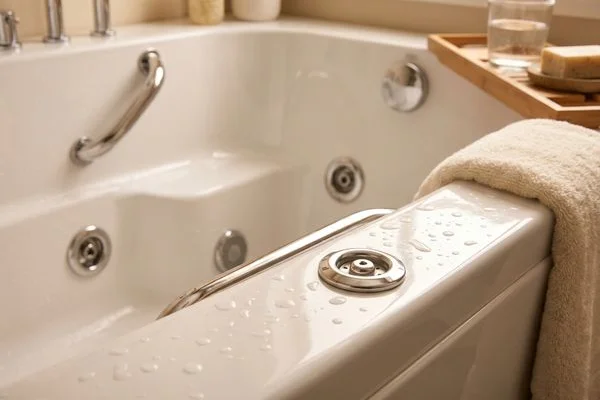
Arthritis relief is one of the most frequently cited benefits. The Arthritis Foundation recognizes warm water hydrotherapy as an effective complementary treatment for both osteoarthritis and rheumatoid arthritis. The combination of warm water immersion and targeted jet pressure reduces joint stiffness, decreases pain, and improves range of motion.
Warmth and circulation. Warm water is widely used for comfort and muscle relaxation. If the user has diabetes, peripheral neuropathy, or any circulatory or cardiac condition, talk to their doctor before using a heated tub or jets at all — reduced sensation in the feet and legs makes it easy to be scalded without feeling it, and hot-water immersion affects blood pressure. This is a conversation for a clinician, not a salesperson.
Muscle relaxation and pain management extend beyond arthritis to include general muscle stiffness, lower back pain, and recovery from physical therapy exercises. The buoyancy of water reduces the effective weight on joints by up to 90 percent, allowing muscles to relax more fully than they can on land.
Mental health and relaxation should not be overlooked. The combination of warm water, gentle massage, and the ritual of a relaxing bath can reduce stress hormones, improve sleep quality, and provide a daily wellness practice that seniors look forward to rather than dread.
Cost Versus Facility Care: The Numbers That Matter
One of the most powerful arguments for aging-in-place modifications like walk-in tubs is the dramatic cost difference compared to facility-based care. Understanding these numbers can help your family make an informed financial decision.
| Care Option | Monthly Cost | Annual Cost | 3-Year Total |
|---|---|---|---|
| Assisted Living (National Median) | $6,200 | $74,400 | $223,200 |
| Memory Care (National Median) | $7,500 | $90,000 | $270,000 |
| Walk-in Tub + Home Modifications | One-time: $2,000 - $10,000 | $0 ongoing | $2,000 - $10,000 total |
Even when you factor in additional home care support such as a part-time caregiver at $500 to $1,500 per month, the total cost of aging in place with proper modifications is typically 70 to 90 percent less than facility placement over a three-year period. Our free Home vs. Facility Cost Calculator can show you the exact savings for your specific situation.
Cost Insight: A premium walk-in tub installation at $8,000 costs less than two months of assisted living at the national median. Whether it saves money overall depends on what care would otherwise be needed — the cost calculator is the honest way to work that out for your own situation.
The Installation Process: What to Expect
The walk-in tub installation process is designed to be as minimally disruptive as possible while ensuring a safe, code-compliant result.
During the initial consultation, a Certified Aging-in-Place Specialist visits your home to assess the existing bathroom layout, measure the available space, evaluate the plumbing and electrical infrastructure, and discuss your specific mobility needs and preferences. This assessment is always free and takes approximately 60 to 90 minutes.
Design selection follows the assessment. Based on the specialist’s recommendations, you choose from a curated selection of walk-in tub models that fit your space, budget, and feature preferences. You will review detailed specifications including dimensions, jet configurations, seat options, and finish colors.
Installation day typically begins with removal of the existing tub or shower unit. Certified contractors then handle all plumbing modifications, electrical work for heated features and jet pumps, and waterproofing. Most standard installations are completed within one to two days.
Post-installation walkthrough ensures you and your loved one are completely comfortable with every feature. The specialist demonstrates how to operate the door seal, adjust water temperature, activate jets, use the quick-drain system, and access emergency features. Maintenance instructions and warranty documentation are provided at this time.
Choosing the Right Walk-in Tub Model
Selecting the right walk-in tub depends on several factors specific to your situation. Consider the following when making your decision.
Available space is the primary constraint. Measure your existing bathtub alcove or shower area carefully. Many walk-in tubs are designed to fit standard 60-inch by 30-inch alcove dimensions, but compact models for smaller bathrooms and larger models for spacious master baths are also available. If you are weighing a tub against a curbless shower, our walk-in tub vs. roll-in shower comparison breaks down the trade-offs.
Door swing direction matters for accessibility. Left-hinged and right-hinged doors are available, and the correct choice depends on your bathroom layout, where grab bars are positioned, and whether the user approaches the tub from a specific direction based on their mobility pattern.
Feature priorities should align with your health needs. If easing joint stiffness is a goal, look at models with adjustable hydrotherapy jets. If the user has circulation concerns, heated seat and backrest features provide continuous warmth during fill and drain cycles. If quick entry and exit is most important, focus on models with the fastest drain systems.
Weight capacity is an important but often overlooked consideration. Standard walk-in tubs accommodate users up to 300 pounds, while bariatric models support 400 to 600 pounds. Choosing the appropriate capacity ensures safety and comfort.
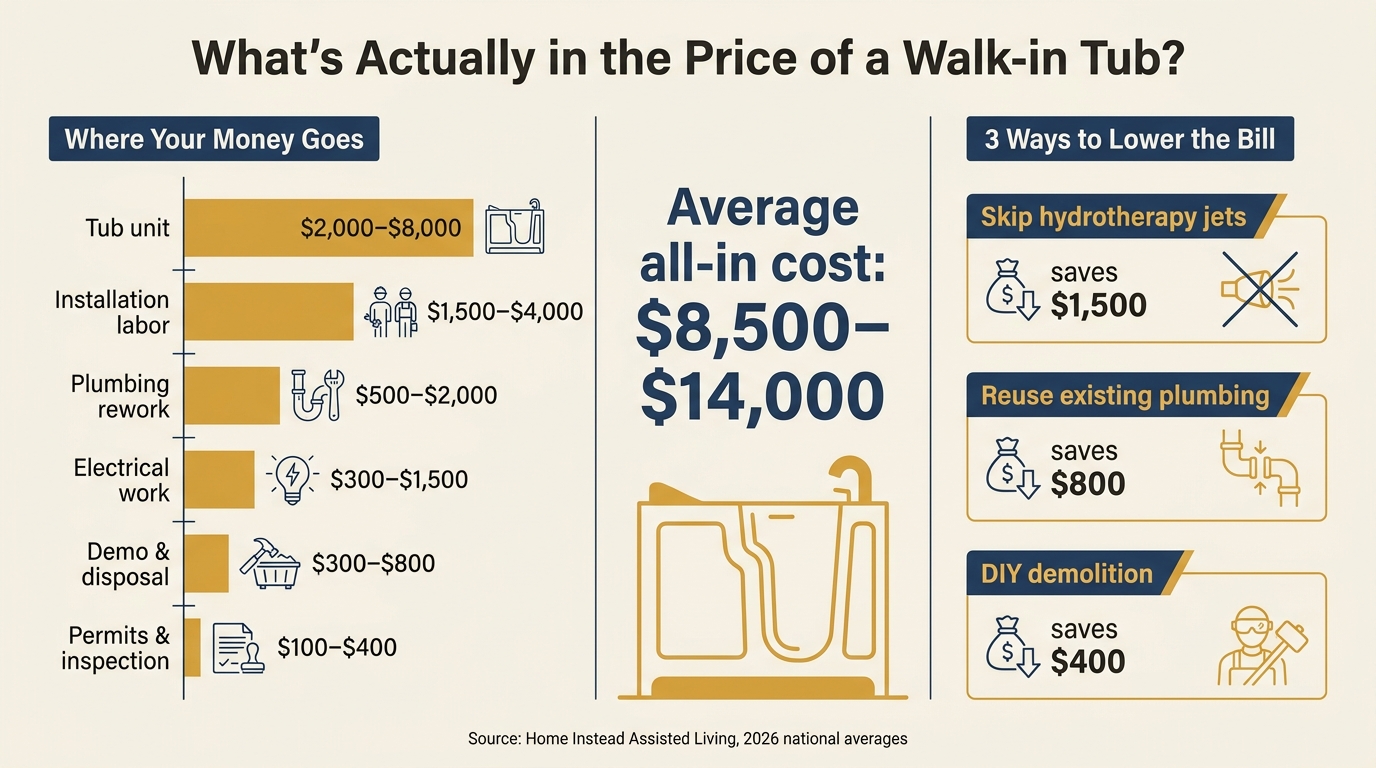
Budget allocation should account for installation costs as well as the tub itself. A basic walk-in tub starts around $2,000 for the unit, with installation adding $1,000 to $3,000 depending on the complexity of your bathroom’s plumbing and electrical requirements. Premium models with full hydrotherapy and ADA compliance range from $5,000 to $10,000 installed. For a full pricing breakdown by model type, see our walk-in tub cost guide.
A Certified Aging-in-Place Specialist can help you weigh these choices, balancing safety, comfort, therapeutic benefit, and budget for your situation. Measure your space, set your budget, and use the cost guide above before you request a single quote.
Alternatives to Walk-In Tubs
Walk-in tubs are an excellent solution for many seniors, but they are not the only option for safer bathing. Depending on your mobility level, bathroom layout, and budget, an alternative may be a better fit.
Roll-in (curbless) showers eliminate all barriers and are the best choice for wheelchair users or seniors with very limited mobility. Tub-to-shower conversions are a budget-friendly option starting around $1,500 that replaces a traditional tub with a low-threshold shower. For the lowest-cost approach, tub transfer benches and bath lifts ($100 to $800) work with your existing tub and require no remodeling at all.
Explore all options with cost comparisons in our complete walk-in tub alternatives guide.
Walk-In Tubs as an Aging-in-Place Solution
A walk-in tub is one piece of a comprehensive aging-in-place strategy. Families who invest in bathroom safety modifications often combine a walk-in tub with strategically placed grab bars, non-slip flooring, and improved lighting to create a bathroom that remains safe as mobility changes over time.
When paired with modifications in other rooms — such as stair lifts, smart monitoring, and kitchen accessibility upgrades — a walk-in tub helps eliminate the need for facility placement entirely. See our complete home modifications guide for a room-by-room approach to aging in place safely.
What to Look For in a Walk-in Tub
Use a CAPS-Certified Professional
Look for a CAPS-certified professional, who is trained in the intersection of home design and senior mobility needs.
Fraction of Facility Cost
A walk-in tub installation typically costs between $2,000 and $10,000, which is far less than a single year of assisted living at about $74,400 a year.
Same-Day Safety Improvements
Many installations are completed within one to two days, meaning your loved one can begin bathing safely within days of the work starting.
Comprehensive Warranty Coverage
All recommended tub models come with manufacturer warranties covering the shell, motor, and plumbing components for years of worry-free use.
Comfort Features
Many users find warm water eases stiff joints and muscles. Trials of hydrotherapy in arthritis report modest short-term benefit on low-to-moderate certainty evidence — worth having, but not a treatment, and worth checking with a doctor first.
Universal Design Compatibility
Tubs that follow Universal Design principles look right in any bathroom and serve household members of all ages and ability levels.
How a Walk-in Tub Install Runs
Measure First
Start by measuring your existing tub alcove and checking your water heater capacity — those two numbers rule out most of the catalogue before you talk to anyone.
Custom Design
Next comes choosing the tub model, the features worth paying for such as heated seats, and finishes that suit the existing bathroom. Get the model number in writing before you sign.
Professional Installation
Certified contractors handle complete installation including plumbing modifications, electrical work for heated features, and finish carpentry in as little as one to two days.
Safety Walkthrough
Before final payment, ask for a full walkthrough covering every feature, the emergency drain and door release, and what maintenance the unit needs.
What Facility Care Costs, and What Modifications Cost
Assisted living runs about $74,400 a year at the national median. A one-time investment in walk-in tubs costs a fraction of that. Run the numbers for your own situation with our free cost calculator.
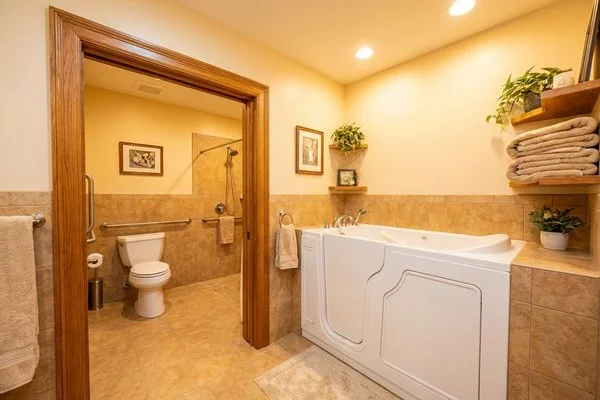
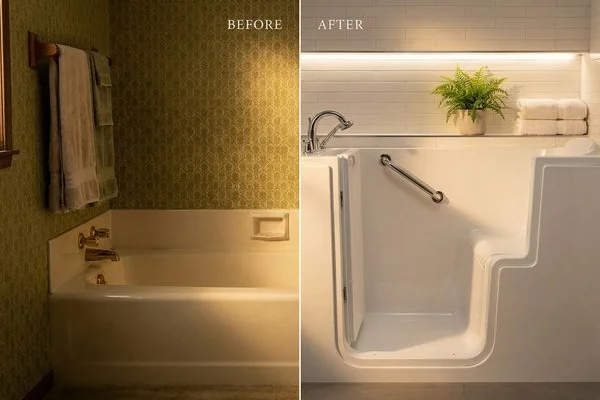
SubscribeWhat This Work Looks Like
Common Questions About Walk-in Tubs
How much does a walk-in tub installation cost?
How long does installation take?
Will a walk-in tub fit in my existing bathroom?
Are there financial assistance programs to help cover the cost?
What is the difference between hydrotherapy jets and air jets?
How does the quick-drain feature work?
Do walk-in tubs use more water than regular bathtubs?
Can a walk-in tub increase my home's resale value?
Related Guides
Bathroom Access
Complete bathroom and entryway transformations including curbless showers, wider doorways, and zero-step entries.
Learn More →Safety Assessments
Room-by-room safety assessments identifying fall risks, accessibility barriers, and recommended modifications.
Learn More →Stair Lifts
Reliable stair assistance with battery backup and custom fit to restore full home access.
Learn More →Try Our Free Cost Calculator
Compare the cost of home modifications versus assisted living to see how much your family can save.
Use Cost CalculatorStart With the Free Checklist
Our free room-by-room checklist and cost calculators lay out the options, the real costs, and how they compare with facility care.
Subscribe