
How to Compare Senior Care Communities
When aging in place is no longer safe or feasible, our directory and comparison guides help families work out the right level of care. Browse hundreds of communities across assisted living, memory care, independent living, and skilled nursing, and adult day care. Each listing carries the community name, address, phone, care types, and its public Google rating where one exists. Most do not publish pricing, so our cost guides cover what to ask about instead.
What the Directory Includes
When Aging in Place Is No Longer the Answer
At Porchlight at Home, we believe firmly that aging at home should always be the first option explored. Home modifications, smart monitoring technology, and community support systems can keep the vast majority of seniors safely at home far longer than most families expect. But we also believe in being honest about the situations where facility-based care becomes the safest, most compassionate choice.
Recognizing when that threshold has been crossed is one of the hardest decisions a family will ever make. The guilt, uncertainty, and emotional weight of this transition can be paralyzing. Our Senior and Memory Care Directory exists to support families through this process with honest information, independent research, and editorial guidance that prioritizes your loved one’s wellbeing over any business interest.
We are not a placement agency that earns higher fees for recommending more expensive facilities. We are a publisher. We help families make informed decisions with transparent cost data, public ratings shown at their source, and the kind of candid guidance you would expect from a well-researched friend rather than a salesperson.
Understanding the Levels of Senior Care
The senior care landscape includes several distinct care levels, each designed to serve different needs. Understanding these distinctions helps families match their loved one with the appropriate level of support.
Independent living communities are designed for active seniors who want a maintenance-free lifestyle with built-in social opportunities. Residents live in private apartments or cottages and have access to dining services, fitness centers, activity programming, and transportation. No medical care or assistance with daily activities is included in the base cost. Independent living is ideal for seniors who are fully capable of self-care but want to downsize, simplify, and enjoy a more social environment.
Assisted living facilities provide help with Activities of Daily Living including bathing, dressing, grooming, medication management, and mobility assistance. Residents live in private or semi-private rooms with access to common dining areas, activity spaces, and outdoor areas. Staff is available 24 hours a day, and care plans are customized to each resident’s specific needs. Assisted living is appropriate for seniors who need regular help with daily tasks but do not require continuous medical supervision.
Memory care facilities are specialized communities designed for individuals with Alzheimer’s disease, dementia, or other cognitive impairments. These facilities feature secured environments to prevent wandering, specialized staff trained in dementia care techniques, structured daily programming designed to maintain cognitive function, and sensory-stimulating environments. Memory care is necessary when cognitive decline creates safety risks that cannot be adequately managed at home or in standard assisted living.
Skilled nursing facilities provide the highest level of non-hospital medical care, including wound care, intravenous therapy, physical rehabilitation, and continuous medical monitoring. These facilities are staffed by registered nurses and licensed practical nurses around the clock. Skilled nursing is appropriate for seniors who require ongoing medical treatment, post-surgical rehabilitation, or management of complex medical conditions.
Adult day care programs provide structured daytime activities, socialization, meals, and sometimes medical supervision for seniors who return home each evening. These programs serve two important purposes: they provide cognitive and social stimulation for the senior, and they give family caregivers essential respite during working hours. Adult day care can significantly extend the period during which aging in place remains viable.
Senior care options for mobility limitations: Before committing to facility placement, families of seniors with mobility challenges should explore whether professional home safety modifications could make aging in place viable. Grab bars, stair lifts, walk-in tubs, and fall prevention solutions can address many of the mobility barriers that initially prompt families to consider assisted living. In-home care combined with targeted modifications often costs significantly less than facility care while preserving independence and familiar surroundings.
Important Distinction: The level of care needed is not static. A senior who starts in independent living may eventually need assisted living, and later memory care. Understanding this continuum helps families plan for current needs while anticipating future transitions.
How to Use the Directory Effectively
Our directory is designed to give families the information they need to narrow their options efficiently before investing time in facility tours.
Start with location parameters. Determine the geographic area where your loved one will receive the best support. This might be near their current home to maintain social connections, near an adult child who will be the primary family contact, or in an area with lower costs of living to extend financial resources. Our directory allows you to search by city, zip code, or radius from a specific address.
Filter by care level. Select the appropriate care type based on your loved one’s current needs: independent living, assisted living, memory care, skilled nursing, or adult day care. If you are uncertain about the right care level, our care-planning guides can help you assess your loved one’s Activities of Daily Living and cognitive function to determine the most appropriate placement.
Compare cost ranges. Our listings show actual monthly cost ranges including base rates and typical add-on charges. This transparency helps you establish realistic budgets before engaging with facility sales teams who may initially quote base rates that do not reflect the true total cost.
Read community reviews. Family reviews provide perspectives that marketing materials cannot. Look for comments about staff responsiveness, meal quality, activity programming, cleanliness, communication with families, and how the facility handles concerns and complaints. A pattern of similar feedback across multiple reviews is more meaningful than any single review.
Compare multiple options. We recommend identifying at least three to five communities that meet your criteria before scheduling tours. Our comparison tool allows you to view communities side by side across key metrics including cost, care levels, amenities, ratings, and proximity.
The True Cost of Facility Care
Understanding the real cost of senior care facilities is essential for financial planning and for making meaningful comparisons with aging-in-place alternatives.
| Care Level | National Median Monthly | National Median Annual | Cost Range |
|---|---|---|---|
| Independent Living | $3,000 | $36,000 | $1,500 - $6,000/mo |
| Assisted Living | $6,200 | $74,400 | $3,000 - $8,000/mo |
| Memory Care | $6,500 | $78,000 | $4,000 - $12,000/mo |
| Skilled Nursing (Private) | $10,798 | $129,575 | $7,000 - $14,000/mo |
| Adult Day Care | $1,600 | $19,200 | $900 - $2,500/mo |
Hidden costs to watch for include care level surcharges that increase as a resident’s needs change, medication management fees charged separately from base care rates, incontinence supply fees, laundry service charges, transportation fees for medical appointments, and community fees or move-in deposits that can range from $1,000 to $5,000.
Financial planning considerations should account for the fact that the average length of stay in assisted living is approximately 22 months, and in memory care approximately 18 to 24 months. The total investment over the typical stay works out at roughly $136,400 for assisted living (22 months at the national median) and $156,000 or more for memory care.
Recognizing When Facility Care Becomes Necessary
While our first recommendation is always to explore home-based solutions, certain signs indicate that facility care should be seriously considered.
Cognitive safety risks are the most urgent indicator. If your loved one wanders away from home, leaves the stove on and forgets about it, cannot recognize familiar people or places, or exhibits behaviors that put themselves or others at risk, supervised care may be necessary for safety.
Escalating care needs that exceed what can be safely provided at home indicate the need for professional support. If your loved one needs help with most or all Activities of Daily Living, requires nighttime assistance, needs skilled nursing care for wounds or medical devices, or has frequent falls despite comprehensive home modifications, a staffed facility may provide safer care.
Caregiver burnout in family members is a legitimate and serious concern. If the primary family caregiver is experiencing physical health decline, emotional exhaustion, social isolation, financial strain, or relationship deterioration due to caregiving demands, transitioning to facility care protects both the senior and the caregiver.
Social isolation that persists despite efforts to maintain connections can be addressed more effectively in a community setting. Senior living communities provide built-in social interaction, activity programming, and peer relationships that are difficult to replicate for a senior living alone at home.
Preparing for Facility Tours
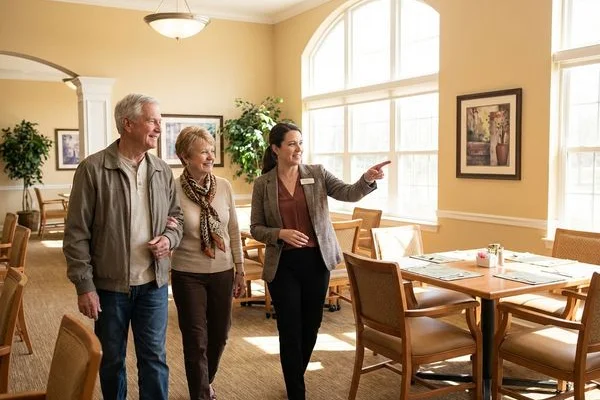
Visiting potential communities in person is an essential step that no amount of online research can replace. Here are the most important elements to evaluate during your visit.
Staff interaction quality is the single most revealing indicator of a facility’s care culture. Watch how staff members interact with current residents. Are they patient, warm, and respectful? Do they address residents by name? Do residents appear comfortable and at ease with staff? The quality of these interactions predicts the quality of care your loved one will receive.
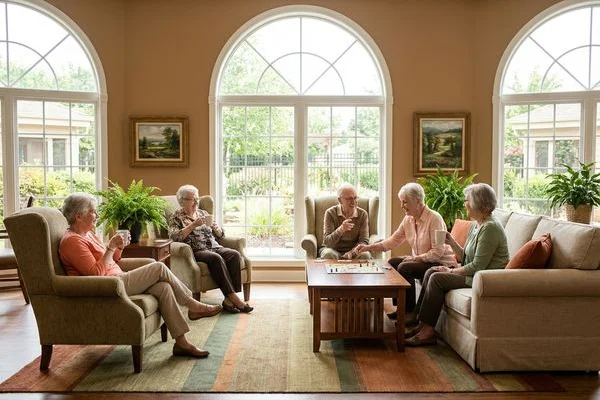
Resident engagement levels tell you about the community’s programming and culture. Are residents actively participating in activities, socializing in common areas, and generally appearing engaged and content? Or are many residents sitting alone, unengaged, or appearing distressed? The difference is significant.
Physical environment should be clean, well-maintained, and free of unpleasant odors. Common areas should be bright, welcoming, and accessible. Outdoor spaces should be safe and well-maintained. Resident rooms should be clean and personalized, indicating that individual preferences are respected.
Ask about staffing ratios during different shifts. How many caregivers are on duty during the day, evening, and overnight? What is the ratio of licensed staff to unlicensed aides? What is the staff turnover rate? High turnover often correlates with lower care quality.
Request inspection reports from the most recent state survey. Every facility is inspected regularly, and the results are public record. Ask the facility to share their most recent report and discuss how any deficiencies were addressed.
Our directory and advisory services exist to help your family navigate what may be the most important and difficult decision you will make for a loved one. Whether the right answer turns out to be home modifications, community-based care, or a facility placement, we are committed to providing the honest, transparent information you need to make the choice with confidence. Browse our care-planning guides today.
What This Directory Does — and What It Does Not
Aging-at-Home First Philosophy
Unlike directories that earn a commission on placements, we earn nothing whether you move or stay. Our guides start with whether home modifications can keep someone safe at home, and cover facility care honestly for when they cannot.
A Starting List, Not a Vetted One
Listings are compiled from public business records: name, address, phone, care types, and Google rating. They are a starting point for your own research, not an endorsement. Always check the community against your state’s licensing and inspection database before touring.
Costs Come From You Asking
Most communities do not publish pricing, and the listings here reflect that — only some carry a price range. Our cost guides explain the charges to ask about: base rate, care-level surcharges, medication management, and the fees that appear after the initial quote.
Public Ratings, Not Our Reviews
Where a listing shows a rating and review count, those come from public Google data, not from us — we do not collect or publish family reviews. Read the underlying reviews at the source, and weigh them against what you see on a tour.
Independent Editorial Research
Our editorial team independently researches care options and publishes comparison guides. We are not a placement service and do not earn fees from facility placements; our directory listings include the strengths and weaknesses of each option so families can make their own informed decisions.
Fourteen Metro Areas
Listings currently cover 14 metro areas. If your city is not among them, the comparison guides, cost data, and tour checklist still apply — use your state’s licensing database to build the initial list.
How to Work Through the Search
Define Care Needs
Our care-needs guide helps you understand the level of care needed, from independent living to memory care, based on your loved one's current abilities and medical requirements.
Search and Compare
Search the listings by location, care type, and amenities to build a shortlist, then research each one properly: state licensing records, recent inspection reports, and a tour.
Tour With a Checklist
Book tours yourself, and take a written list of questions. Our tour checklist covers what to ask, what to look at, and the red flags worth walking out over.
Plan the Move
Once a community is chosen, the move itself needs planning: timing, paperwork, what to bring, and how to support the emotional adjustment in the first few weeks.
What Facility Care Costs, and What Modifications Cost
Assisted living runs about $74,400 a year at the national median. A one-time investment in care directory costs a fraction of that. Run the numbers for your own situation with our free cost calculator.
SubscribeWhat This Work Looks Like


Common Questions About Care Directory
Is the senior care directory free to use?
How do I know when home modifications are no longer enough?
What is the difference between assisted living and memory care?
How much does assisted living cost on average?
Can someone with early-stage dementia still live safely at home?
What should I look for when touring a facility?
Does Medicare cover assisted living costs?
How do I compare the quality of different facilities?
Related Guides
Fall Prevention
Expert-recommended modifications including grab bars, improved lighting, and non-slip surfaces to prevent falls.
Learn More →Safety Assessments
Room-by-room safety assessments identifying fall risks, accessibility barriers, and recommended modifications.
Learn More →Smart Monitoring
Non-intrusive smart sensors and monitoring technology that alert family members to unusual activity patterns.
Learn More →Start With the Free Checklist
Our free room-by-room checklist and cost calculators lay out the options, the real costs, and how they compare with facility care.
Subscribe