Stair Lift Rental: Cost, Rent-to-Own, and When to Rent vs. Buy
Stair lift rental runs 50–00/month with install and removal fees. Here’s when renting saves money — and when buying is the smarter call.
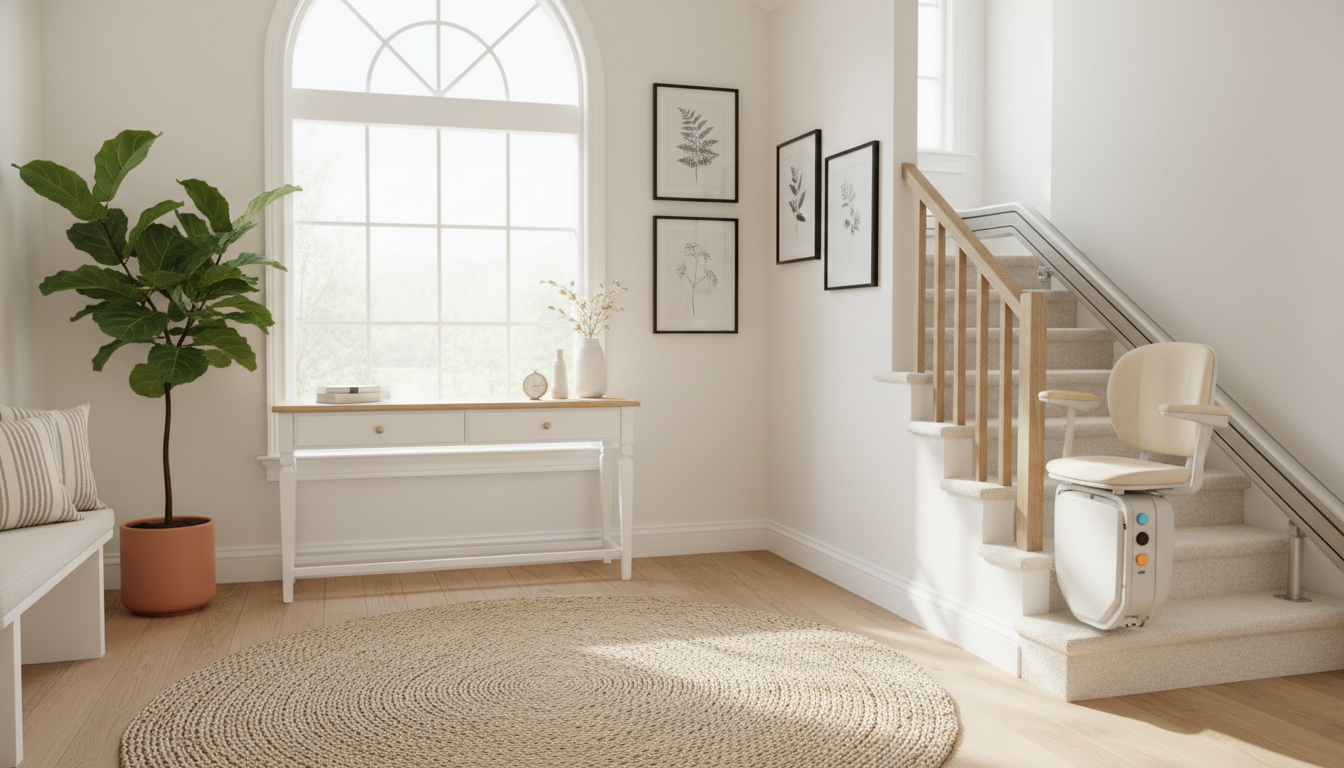
Renting a stair lift makes sense when you only need it for a few months — post-surgery recovery, a parent moving in temporarily, or hospice care at home. But the monthly math flips against you fast: past the 14-month mark, renting almost always costs more than buying outright. This guide covers rental pricing, rent-to-own programs, and the break-even math so you can choose confidently.
Who Should Rent a Stair Lift Instead of Buying
Stair lift rental makes financial and practical sense in five specific situations:
- Short-term recovery — Post-hip-replacement, post-knee-replacement, or post-stroke rehab typically 2–6 months. Renting avoids paying $3,000+ for something you’ll only use briefly.
- Hospice or end-of-life care at home — When a family wants a loved one home for a final stretch, rental provides dignity without long-term commitment.
- Testing before buying — Not sure a stair lift is the right solution? A 30–90 day rental lets the user actually try it before a $3,000–$18,000 purchase.
- Planned home sale within 12 months — If you’re selling soon, renting avoids the cost of installing, then removing, a stair lift that won’t add value for most buyers.
- Temporary family caregiving — When a parent moves in for chemotherapy, a season of care, or during a home renovation elsewhere, rental matches the timeframe.
If the user will need stair access for more than 14–18 months, buying (or rent-to-own) is almost always cheaper. See our Stair Lifts resource page for buying guides and model comparisons.
2026 Stair Lift Rental Cost Breakdown
Typical straight stair lift rentals in 2026 run $150–$400 per month with an upfront installation fee separate from the monthly rate. Curved rentals are rare because custom rails aren’t economical for short terms.
| Cost Item | Typical Range | Notes |
|---|---|---|
| Installation fee (one-time) | $300–$600 | Sometimes waived on 12+ month commitments |
| Monthly rental (straight indoor) | $150–$400/mo | Shorter rentals cost more per month |
| Monthly rental (straight outdoor) | $200–$500/mo | Weather-sealed units; limited availability |
| Removal fee (one-time) | $200–$500 | Some companies waive this for 6+ month rentals |
| Deposit (refundable) | $0–$500 | Applied against damage or missed payments |
| Minimum rental term | 1–3 months | Varies by provider |
| Typical 3-month total | $950–$2,100 | Install + 3 months + removal |
| Typical 6-month total | $1,400–$3,100 | Install + 6 months + removal |
| Typical 12-month total | $2,300–$5,300 | Install + 12 months + removal |
Rent vs. Buy: The Break-Even Math
For a straight indoor stair lift priced at $3,500 all-in (typical mid-range unit), here’s where renting stops making sense:
- Months 1–4: Rental is clearly cheaper ($950–$1,550 vs. $3,500 buy)
- Months 5–10: Rental still favorable but closing fast ($1,700–$2,700 rental vs. $3,500 buy)
- Months 11–14: Break-even zone — decide based on resale value expectations
- Month 15+: Buying wins, often by $1,000+ over 24 months
The used-resale market rescues the buy-and-sell path: a straight stair lift 2–3 years old still sells for $800–$2,000, so buying, using for a year, and reselling often nets $1,500–$2,500 net cost versus $2,300–$5,300 for a 12-month rental.
Rent-to-Own Programs: A Hybrid Option
Several national providers offer rent-to-own programs that apply some or all rental payments toward a future purchase. The typical structure:
- Pay a standard monthly rental rate for 3–12 months
- 50–100% of paid rental fees apply as credit if you convert to purchase
- Lock in the purchase price at the start of the rental
- Decide to buy or return by the end of the rental term
Companies with established rent-to-own programs in 2026:
| Provider | Min Rental Term | Rent-to-Own Credit | Coverage Area |
|---|---|---|---|
| 101 Mobility | 3 months | Up to 100% of rental fees | National, 130+ locations |
| AmeriGlide | 3 months | 50% credit toward purchase | Direct-to-consumer, national install network |
| Acorn Stairlifts | 6 months | Varies by promotion | National, via certified dealers |
| Stannah (via dealers) | 3 months | Varies by dealer | Select metros |
| Local independent dealers | Often 1 month | Usually 100% credit | Typically 50-mile service radius |
Ask two questions before signing a rent-to-own agreement: (1) what’s the locked purchase price, and (2) what happens to the credit if you extend the rental past the original term? Some providers forfeit the credit if you exceed 12–18 months of rental.
What a Rental Quote Should Include
A legitimate stair lift rental quote breaks out these line items — if any are missing, ask:
- Installation fee (one-time, $300–$600) or explicit note that it’s waived
- Monthly rental rate with term length (month-to-month vs. 6-month vs. 12-month)
- Included maintenance (reputable rentals include service calls and battery replacement)
- Removal and disposal fee at end of term
- Damage policy — what’s considered normal wear vs. tenant-caused damage
- Early termination fees (should be minimal or zero; avoid contracts with large ETFs)
- Buyback or conversion option and its pricing
Red Flags in Stair Lift Rental Contracts
Four warning signs that a rental deal is worse than it looks:
- 12-month minimum with steep early termination fees. If recovery goes faster than expected, you shouldn’t be penalized $500–$1,500 to end early.
- “Service calls not included.” Rentals should bundle maintenance — you’re paying for a worry-free experience, not a unit-only lease.
- Installation fee > $700. Straight stair lift install runs $300–$600 from reputable dealers. Higher fees indicate markup.
- Opaque rent-to-own math. The locked purchase price should be disclosed upfront in writing, not calculated later.
Insurance and Funding for Stair Lift Rental
Most funding sources cover rental the same way they cover purchase:
- Medicaid HCBS waivers in most states cover rental for qualifying temporary needs, typically up to 6–12 months
- VA HISA grants can be applied toward rental install and removal fees
- Long-term care insurance often covers rental under “temporary equipment” or “rehabilitation equipment” benefits
- Medicare Original does not cover stair lift rental or purchase in 2026
- Medicare Advantage plans occasionally cover rental under supplemental benefits — check your plan’s Durable Medical Equipment (DME) policy
- Workers comp and auto insurance cover rental when the need stems from a covered injury (slip-and-fall, car accident with lasting mobility impact)
Installation and Removal: What to Expect
A rental install looks identical to a purchased install — same rail, same unit, same 2–4 hours of setup for straight lifts. For full detail on the install day experience, read our stair lift installation guide.
Removal at end of rental typically takes 1–2 hours. The installer unbolts the rail, removes the carriage and seat, and patches the tread holes with wood putty. Most rental companies repaint or re-stain the affected tread areas if requested, though carpet replacement is an extra cost.
Alternatives to Rental Worth Considering
Rental isn’t always the best short-term option. Consider these alternatives for stays under 6 months:
- Portable stair-climbing devices — Battery-powered devices a caregiver operates to help a senior navigate stairs. $1,500–$4,000 to buy, or $150–$300/mo to rent. Works without any staircase modification.
- Used stair lift purchase — A used straight lift runs $800–$2,000 all-in with install. Resell after 6 months and net cost is often under $1,200.
- Temporary relocation to main-floor bedroom — For recovery periods, setting up a first-floor bedroom/bathroom with a hospital bed costs $0–$500 and avoids the stair issue entirely.
- In-home care with stair assistance — For very short periods (1–4 weeks), a home health aide for stair transfers may cost less than a full lift rental.
The Bottom Line on Stair Lift Rental
Stair lift rental works best for needs under 12 months: post-surgery recovery, hospice, testing, or a planned move. Expect $150–$400/month plus a $300–$600 install fee and $200–$500 removal. Past 14–18 months, buying (or rent-to-own with full credit) is almost always cheaper. Ask specifically about the locked purchase price, removal fee, and early-termination terms before signing any rental contract.
Want help figuring out whether rental or purchase makes sense for your family’s specific timeline? Ask any dealer offering rent-to-own for the total cost over the full term, the removal terms, and what happens if you need the lift longer than planned.